Siberia Plague Death: What We Know, What's Disputed, What Would Change the Picture
THE WORLD · OCTOBER 5, 2026 · updated October 7, 2026
This is a living page. A 27- or 28-year-old laboratory worker at the Irkutsk Anti-Plague Institute in southern Siberia died in early October 2026 after a severe pneumonia, and Russian and foreign outlets have reported that it was pneumonic plague. I wrote a first explainer on October 2. Rather than stack a new post on top each time something moves, I'll keep this page current: what is confirmed, what is disputed, and what would change my reading. Last updated October 7, 2026.
The briefing at a glance
The full write-up
The graphic above is the summary. Below is the detail behind every box, with who said what.
Where things stand on October 6
Contained so far, and unexplained. About 200 people who had contact with the woman (197 identified, 189 hospitalized for observation, by one count) were reported by the regional governor to be symptom-free with negative tests. No second case has been reported in anything I could open. On October 6 Rospotrebnadzor said about 60% of the identified contacts had been tested, with two COVID-19 and two rhinovirus cases and no other dangerous pathogens (NBC News); that leaves roughly 40% still to report, so “all contacts negative” is not yet established. Separately, the Daily Mail reported on October 6 that Russian local media claim a second person has died at the Irkutsk district hospital; see the disputed section below, because nothing I found confirms it. Later on October 6 the WHO's Director-General said Russia has told it that observation of all identified contacts is complete with no high-threat pathogens, which supersedes the “about 60% tested” figure above as Russia's own claim; the WHO has not independently verified it, and it has asked Russia about “media reports of a second employee with pneumonia of undetermined cause.” Later on October 6 Russia gave the WHO the same account, and the WHO said it has asked which pneumonia-causing pathogen did kill her, so the cause of death is still open. What is not settled is the diagnosis Russian authorities will put their name to, how she was exposed, and how much of the official account can be taken at face value.
What is reasonably well established
- The person. Darya Shipilova (spelled several ways), a laboratory technician at the Irkutsk Anti-Plague Research Institute, hospitalized in Shelekhov with severe pneumonia, and dead within days.
- The scale of the response. Roughly 200 contacts under observation. Irkutsk city hospitals Nos. 1, 3 and 10 and a children's hospital closed for a three-week quarantine; Euronews (October 5) lists three city hospitals, a children's hospital, a maternity hospital and Shelekhov's district hospital, and says more than 60 institute staff have been held inside the building since Friday; two of them tested positive for COVID-19 and two for rhinovirus, none for plague. The head of Russia's health watchdog, Anna Popova, flew in from Moscow and chaired an emergency meeting. Governor Igor Kobzev reported every identified contact negative and symptom-free.
- Outside reaction. The WHO says it is aware of reports, has offered support, and that "to date, no cause of death has been officially confirmed, and laboratory testing is reportedly underway"; on unofficial information, it says the risk to the general population appears low (as quoted by Newsweek). The US State Department said "many details have not been confirmed" and urged Russian authorities to share accurate information quickly and openly (AP). Newsweek adds that the White House is monitoring and the European Commission is following the case "very closely." On October 5 Secretary of State Marco Rubio said it was not "cause for alarm" but "cause for focus," given very limited travel between the US and Russia (CBS News). On October 6 the WHO's Christian Lindmeier told a Geneva briefing that no dangerous pathogens had been detected among contacts and that its initial risk assessment is moderate to low for Irkutsk, low for Russia and very low for the WHO European region; the WHO has asked Russia which pathogen caused the death, and Russia has told it the illness first looked like an ordinary acute respiratory viral infection (Time). Governor Kobzev said on October 5 that the situation is stable and no new institute employees have sought care, and the Shelekhov district mayor says contacts are tested daily. RFE/RL's sources inside the institute say more than 60 staff have been confined there since October 2, sleeping on floors, with no positive test by October 3. A State Department official told NBC on October 6 that US health experts had been in contact with the Russian Foreign Ministry since Friday, and the CDC said it is working across the government to assess developments. Asked on October 5 whether he was concerned about the outbreak in Russia, President Trump said "I am," calling it "the pneumonia plague, if you call it," and adding that "those microbes have gotten stronger and smarter" and that things that used to work on pneumonia "don't work as well anymore" (video posted by Acyn; I am quoting the post's transcript and have not checked it against a full recording). That is a general remark about pneumonia and antibiotic resistance, not new information about Irkutsk, where no plague diagnosis has been confirmed. On October 6, according to UNITED24 Media, Rubio called on Russia to disclose more about the death, said Washington was monitoring "hour by hour," and said the US had measures to assist if it proved more serious but needed more information first; Daily Beirut quotes Trump as saying "we'll help them." The UK Health Security Agency says it is seeking information through International Health Regulations channels.
- The Kremlin line. Spokesman Dmitry Peskov told people to rely on Rospotrebnadzor's statements and dismissed "various rumours" (Euronews, October 5). One outside expert, Professor Ian Jones, told reporters the case "seems like a rare lab accident and is unlikely to go much further" (Philadelphia Inquirer, October 5). That is one expert's read, not a finding.
- Visible nervousness. The Irkutsk Aluminium Plant ordered masks on October 2 (its director later called it a routine seasonal measure). The Baikalsk town administration told residents not to travel to Shelekhov, then deleted the post within about two hours. REN TV took down five Telegram posts about the hospitalizations.
What is disputed
- The diagnosis. The head of neighbouring Buryatia, Alexei Tsydenov, first said she died of plague, then edited his post to say "possibly." Governor Kobzev has said "pneumonia of unknown origin" and that testing found no micro-organisms connected with her professional work. Outlets disagree on whether that was always the federal line or a reversal. Plague has not been officially confirmed by Russian authorities in anything I read.
- The exposure. The account most outlets carry is that she told colleagues she broke a test tube of live bacteria while preparing samples (dated September 25 by two outlets). Epidemiologist Mikhail Favorov, quoted by the Daily Beast, called that implausible and suggested it covers for something else. The alternative, an ordinary natural exposure near the Mongolian border, is denied by Tsydenov, who says she never visited Buryatia and that there is no outbreak in the republic. Mongolian sources are reported to have isolated plague cultures from an active natural focus; I have not opened that report myself.
- The date of death. Most reports now say October 2 (the WHO's date), with hospitalization on September 29, but Newsweek has her dying overnight on October 1 and a few outlets give October 3. The weekday-and-date combinations in several articles don't line up, which is a small sign of how fast this has been written.
- What the doctors say. Local outlet Lyudi Baikala, relayed by Türkiye Today, quotes health-sector sources saying Irkutsk doctors are "openly talking about plague" while the word does not appear in documents sent to hospitals. On October 4 Rospotrebnadzor said no traces of plague were found in her samples and that the diagnosis is pneumonia of unknown cause; one report adds that it denies any accident at the institute. Those two official statements and the test-tube account cannot all be right.
- A second death. The Daily Mail reported on October 6 that Russian media claim a second person died of plague in the isolation zone at the Irkutsk district hospital, and Insider Paper adds that this person was either a staff member or an existing patient infected inside quarantine and that local coverage began disappearing online. UNITED24 Media relays the same report and notes that Russian authorities have not acknowledged a second death. I found no name, no laboratory result and no statement from Rospotrebnadzor, the governor, the WHO or any outlet reporting it first-hand, and the earlier official line (no new institute employees seeking care, contacts negative) conflicts with it. One independent tracker said the same on X: no primary confirmation of a second Yersinia pestis case. I am treating it as an unverified claim; if it is true it is the most important fact on this page, and it would change my reading of whether the chain stopped. The WHO's October 6 statement now gives that rumour a more careful form: it asked Russia about media reports of a second employee with pneumonia of undetermined cause, which is a sick employee, not a confirmed death and not a confirmed plague case. So the claim has moved from “only the Daily Mail” to “something the WHO is asking about,” and the death itself is still unconfirmed. UNITED24 and Daily Beirut also report that Mongolia, Kyrgyzstan and Uzbekistan have tightened health controls on the border, which I could not check against an official source.
- Security-service involvement. Annie Jacobsen, citing local news, reported FSB units accompanying ambulances that carried contacts for examination, and Euronews (October 5) now says FSB officers have escorted ambulances since Thursday. Both rest on local reporting I cannot check; the reason for the escorts is not stated anywhere I read.
Claims going around that I could not confirm
- "The US thinks Russia is lying" and "tells Americans to leave immediately." Jay in Kyiv posted on October 7 that "as another victim dies due to the plague, the US thinks Russia is lying and urges all Americans to leave Russia," attaching a screenshot of the US Embassy's October 6 alert. The alert itself is real (see the timeline) and is narrower than the post. It says the embassy is aware of "press reports" of suspected pneumonic plague, that Irkutsk hospitals are under quarantine, and that US government ability to help citizens outside Moscow is limited. Nothing in it says the US disbelieves Russia. The instruction to depart immediately repeats the Level 4 Do Not Travel advisory that has stood for Russia for years, with its stated reasons of wrongful detention and security, not the plague. "Another victim" leans on the unconfirmed second-death report above; the embassy alert mentions one death. Read it as a routine health notice plus a standing advisory, not a new evacuation call.
- "Something worse than plague?" On October 7 the X account J. P. Weiland wrote that the woman "has NOT tested positive for pneumonic plague," that her death was described as "unknown etiology," and that "the scale and intensity of the Russian response definitely raises eyebrows." He was quoting Joseph Allen, who said he had just told CNN that "the scale and speed of the institutional response (emergency commission, isolation of institute staff, multi-hospital quarantine) is disproportionate to a routine community-acquired pneumonia and is consistent with a precautionary response to a suspected high-consequence pathogen exposure." I have not seen the CNN segment, only the quote in his post. The first part is accurate as far as it goes: Russian officials have not confirmed plague and the official line is pneumonia of unknown origin. The second is an inference. A large response is what you would expect for plague, for another dangerous pathogen, or for authorities who are cautious or want to be seen to be, and it does not by itself say which. Nothing I have found names a pathogen other than plague, and the contacts tested so far have been negative; "worse than plague" is a worry, not a finding. It would change my reading if a lab identified another agent or if contacts began to fall ill.
- "Universities canceling classes." Widely shared on X on October 4 (from the account Jay in Kyiv, reposted by former astronaut Terry Virts). The post cites no source, and I found no outlet reporting it, so I am not treating it as established.
- "The outbreak is getting worse." The reported evidence is more quarantined facilities, not more sick people. No new confirmed case appears in anything I could open, and the contacts were still reported negative.
- "About 40 flights left Irkutsk" after September 26. An X account called Irkutsk Live (bio: "sourced updates on the Irkutsk lab leak") posted on October 3 that roughly 40 tracked flights, to Moscow, Beijing, Bangkok, Phuket and elsewhere, left Irkutsk between September 26 and her September 29 hospitalization, and called those routes "the exposure map." The post cites no data source. Even if the flight count is right, it says nothing about whether anyone infectious was aboard: she was hospitalized September 29, and no contact has been reported positive. Irkutsk has ordinary daily air traffic.
- "It came from China" / a China–Russia drill. A crypto-trading account on X posted on October 5 that the outbreak "could have originated in China" and pointed to a Chinese emergency drill in Heilongjiang, attended by Russian specialists, two weeks before the death. The only source I could find for the drill is an unsourced blog post on Vocal Media, which says a China–Russia cross-border infectious-disease exercise was held in Fuyuan, Heilongjiang, on August 24–27 and that the Irkutsk institute's director attended. I could not confirm the exercise from any news outlet. That post itself does not claim a Chinese origin; it only notes the timing. Even if the exercise happened, a joint drill two weeks earlier is not evidence of where an infection came from, and no outlet I opened reports a Chinese link. Update, October 6: a viral post by Jordan Crowder (@digijordan) now ties the drill to the Irkutsk case, calling it a “plague outbreak simulation” held a month before the accident, and likening it to Event 201, the October 2019 pandemic tabletop exercise run by Johns Hopkins with the World Economic Forum and the Gates Foundation. It attaches two photos, and one shows a stage banner reading, in Chinese and Russian, “2026 China–Russia cross-border infectious disease joint emergency exercise.” So an exercise by that name appears to be real, which the Vocal Media post alone could not show. What I still could not find is a news or official report of it, its dates, or any record that the Irkutsk institute's director, Sergey Balakhonov, spoke at it in person. Two points hold either way: a drill is something health agencies in neighbouring countries routinely run, and that one took place near the date of an unrelated accident is a coincidence, not evidence that the accident was planned or that plague came from China. The Event 201 comparison is the same pattern-matching.
- "Patient Zero": the Taylor Swift date coincidence. An October 5 post from the account Uncensored.AI says Taylor Swift released a song called "Patient Zero" on September 25, 2026, "the same day the literal plague supposedly escaped from a lab in Russia," and that this was "exactly 6 months, 6 years and 6 days since the first COVID-19 lockdown." The song is real and did come out on September 25 (Deadline and Variety reported the date, and its countdown was announced on September 22, three days before). The rest does not hold up. September 25 is the date two outlets give for the alleged broken test tube, but Rospotrebnadzor denies any accident, so the "same day" is itself unconfirmed. The "6 years, 6 months, 6 days" arithmetic works out to March 19, 2020, which is the date of California's statewide stay-at-home order; it only matches because that one date is chosen as "the first lockdown," when Wuhan was locked down on January 23 and Italy on March 9. A song title and a date that line up after the fact is a coincidence of the kind such numbers always produce, and nothing in any reporting connects the song, or its release plans, to the Irkutsk case.
- "Now we know why they broke a test tube" (the vaccine insinuation). A widely shared October 5 post by Dr. Mary Talley Bowden, captioned "Well now we know why they broke a test tube full of the plague," attached a screenshot of a news item about an Israeli mRNA vaccine for pneumonic plague. It implies the exposure was deliberate and that the vaccine is the motive. The vaccine study is real: Elia et al., with Prof. Dan Peer's group at Tel Aviv University and the Israel Institute for Biological Research, published online in Advanced Science on April 25, 2025, about 17 months before this case. It was tested in mice only; the paper reports 100% survival after three doses and 75–100% after two (the screenshot says two doses gave 100%), and its authors caution that results may not carry over to humans. No human trial has been reported. I found no evidence in any reporting that the Irkutsk exposure was deliberate, nor any link between that research and the Irkutsk institute. A published preclinical paper that predates the event is not evidence about it, and a mouse-only vaccine is not a product anyone could sell in the next few weeks. The story was also not new when it went around: the German-language Jewish weekly Jüdische Allgemeine covered the work on January 3, 2026, and a reply-post on October 6 recirculated that article, which is why it keeps resurfacing alongside the Irkutsk news.
- "The WHO simulated a bacterial pandemic in April, how convenient." An October 6 X post by the account WitsitGetsIt, with a video. The exercise is real: the WHO ran “Polaris II,” a two-day global simulation with 26 countries and about 600 experts, announced in a WHO communiqué on April 27, 2026 (Radio Algérie). It was the second in a series; Polaris I, in 2025, simulated a fictional virus, “mammoth pox.” One secondary site describes the 2026 scenario as a new bacterial strain spreading across 27 countries; I could not check that against the WHO’s own text, and none of the reporting I found names plague or Russia. A recurring, pre-announced preparedness exercise six months earlier does not suggest foreknowledge of an accident in a Siberian lab, and the WHO runs these on a schedule.
- "The DoD just fully funded a plague vaccine with Dynavax, a lucky bet." An October 6 X post by Robin Monotti, attaching a screenshot of Dynavax's own press-release language. The program is real, but it is not recent. The Department of Defense first awarded Dynavax about $22 million in November 2021 to test its CpG 1018 adjuvant with the government's recombinant plague vaccine (rF1V) in a Phase 2 trial (JPEO-CBRND). Dynavax says the DoD signed a further agreement of about $30 million in the fourth quarter of 2024 and added about $14 million in the third quarter of 2025 for non-human primate studies, and that enrollment in Part 1 of the Phase 2 trial finished in the third quarter of 2025. All of it predates the Irkutsk case by years. Plague vaccines are a long-standing biodefense priority, and “fully funded” describes who pays for the work, not any knowledge of an event. No reporting I found links this program to Irkutsk.
- "More than 21 plague vaccines are already in development: why were governments investing before the hysteria?" An October 7 X post by Dr. Peter McCullough, sharing an article by Nicolas Hulscher on TheFocalPoints, with a table of 21 named programmes across six countries (six in human trials or licensed, three on RNA platforms, none approved in the US or EU). I have not checked each row against its source, and the article comes from an outlet tied to the McCullough Foundation with a stated stance on vaccines. The broad point, though, is not controversial: plague vaccines have been developed for decades, and the table’s own entries include long-standing live-attenuated vaccines used in Russia and China, a US Department of Defense–funded programme dating to 2021 (the Dynavax item above), the Oxford group’s adenovirus-vector candidate, and the Israeli mRNA work discussed earlier on this page. Plague is still a live disease: the WHO says it remains endemic in several countries, with most cases reported to it in 2019–2025 in the Democratic Republic of the Congo and Madagascar, and Russian-made plague vaccine has been supplied to Kyrgyzstan and used in Mongolia. A long list of programmes shows a long-running biodefense and public-health field; it does not show advance knowledge of an event in Irkutsk, and no reporting I found links any of these programmes to the case.
- Halting air travel. Virts called for it. That is one public figure's view; I found no report of any flight restriction.
What would change the picture
Pneumonic plague spreads person to person through close respiratory contact, and its incubation is short, a few days at most. That makes the next week informative. Roughly, in order of importance:
- A positive test or new illness among the contacts. Pneumonic plague has a short incubation, so a clean contact list a week or so after exposure is strong evidence the chain stopped. Any new case would change the story at once.
- Official use of the word "plague." Silence is not proof of anything, but a formal confirmation or an international notification (the WHO's rules require reporting certain events) would settle the diagnosis question.
- Independent evidence on the exposure. Institute records, colleagues speaking on the record, or a laboratory incident report would resolve the test-tube account one way or the other.
- A natural-focus case in Buryatia or Mongolia. It would make the lab explanation less necessary.
Rodents that carry plague mostly go dormant by early October, according to epidemiologist Gennady Onishchenko in Euronews, which cuts against a new natural spillover this season.
Update log
- October 7, afternoon. Bumped the page stamps to October 7 (they still read October 6 although content had been added today). Added Trump’s remarks on a call with Putin and on the bioweapon question, and the WHO’s statement that it lacks the information for a full risk assessment and has not confirmed the second death. No new confirmed case or plague confirmation found.
- October 7. Added the “something worse than plague?” reading (J. P. Weiland, quoting Joseph Allen on CNN) to the claim check: the official line really is “unknown origin,” but a large response does not identify a pathogen.
- October 7. Added Jay in Kyiv's framing of the embassy alert ("the US thinks Russia is lying," "leave immediately") to the claim check: the alert is real, but it does not say that and the departure line is the standing advisory.
- October 6. Noted that the Israeli vaccine story circulating again is a January 2026 article about the same 2025 mouse work; nothing new about Irkutsk.
- October 6, later. Added the WHO exchange: Russia told the WHO the worker was not found to have plague, the WHO asked which pathogen killed her, and gave its risk assessment (moderate to low for Irkutsk). Added the Kobzev and district-mayor statements and RFE/RL's reporting on the confined staff.
- October 6, midnight. Added the WHO Director-General's statement (Russia: no plague in Irkutsk oblast, contact observation completed; WHO asks for the cause of the pneumonia and about a second employee with pneumonia) and the US Embassy Moscow health alert with the repeated Level 4 advisory.
- October 7. Added the “21 plague vaccines in development” claim (McCullough/Hulscher): a real, long-running field, no link to Irkutsk found; the table itself not independently checked.
- October 6, 11:30 pm. Added the Daily Mail's claim of a second death (unconfirmed), the page headline and claim-check row changed from “no second case” to “second death claimed, unconfirmed,” and Rubio’s and the UKHSA’s October 6 statements.
- October 6, last. Added President Trump's October 5 remark on the outbreak (via Acyn), labelled as a general comment with no new facts about the case.
- October 6, later still. Added the Dynavax–DoD plague-vaccine claim: a real program running since 2021, not recent, no link to Irkutsk.
- October 6, late. Added the WHO “Polaris II” simulation claim (real exercise, April 2026; no link to Irkutsk found).
- October 6, night. Updated the China–Russia drill item after a viral post (@digijordan) with photos of the exercise banner and an Event 201 comparison. The exercise looks real; no link to the death, and the director-attended claim is unconfirmed.
- October 6. Bumped the page to October 6: Rospotrebnadzor says about 60% of contacts tested with no plague found (NBC News); added the US contact with Russia since Friday, the CDC statement and Rubio's remarks. No new case, natural-focus report or official plague confirmation turned up in my searches.
- October 5, later at night. Added the Taylor Swift "Patient Zero" date-coincidence claim, checked: the song is real, the date arithmetic depends on which "first lockdown" is picked, and the lab accident date is itself unconfirmed. Unverified.
- October 5, night. Embedded the widely shared pneumonic-plague explainer clip near the bottom.
- October 5, late. Added the "deliberate accident / Israeli vaccine" insinuation, with what the underlying 2025 mouse study does and does not show. Unverified; no evidence of any link.
- October 5, evening. Added Euronews's fuller list of six quarantined facilities and the staff test results (COVID-19 and rhinovirus, no plague), the Kremlin line, one expert's view, FSB escorts now reported by Euronews, and the unverified "China origin / drill" claim.
- October 5, afternoon. Added the WHO statement (no confirmed cause, general risk low on unofficial information), the US State Department comment, the maternity hospital as a fifth quarantined facility, and about 60 isolated institute staff. Still no new case reported.
- October 5, later still. Added the unsourced "about 40 flights" claim, and corrected the date on the Jay in Kyiv and Virts posts to October 4.
- October 5, later. Added the fifth-facility report, the doctors' "openly talking about plague" claim, Rospotrebnadzor's October 4 statement, and a section on viral claims I could not confirm (universities, "getting worse," air travel). Still no new confirmed case.
- October 5. Page created. Added: the official "pneumonia of unknown origin" line, the Favorov challenge to the test-tube story, the deleted warnings and posts, the hospital closures, the conflicting death dates. Contacts still reported negative as of October 4.
- October 2. First explainer: the institute, the two exposure theories, why the pneumonic form matters.
The video going around
The clip below passed a million views on X on October 5, posted by an independent journalist and activist with the caption "Ugh we are f***ed guys." It is a vertical podcast-style clip carrying a TikTok watermark for @chriswillx and an on-screen title, Why Pneumonic Plague Is So Dangerous. This page does not summarize what the speaker says; it sets out only the title, the watermark and the caption. The caption is the poster's reaction, not a finding. As a general statement the clip's title is fair, because pneumonic plague does spread person to person and is dangerous untreated, as the graphic above sets out. What it does not show is any evidence about this case: no second case has been reported in anything I could open.
Ugh we are f***ed guys
— Lulu (@ItsLulu_7) October 5, 2026
Where I could be wrong
I am reading English-language reporting of Russian events, much of it from outlets with a stake in the story, and I opened only some of the pages cited here. Anything attributed to anonymous local sources should be held loosely. The framing in some outlets ("cover-up," "another Wuhan") goes well beyond what has been shown; the evidence so far is one death and a large precautionary quarantine. If the contact list stays clean, this will probably end as a laboratory-safety story with an unusually opaque official response. If it does not, this page will say so.
Sources
- The Moscow Times. Nearly 200 People Under Observation After Irkutsk Lab Worker Dies From Plague. 2 October 2026. themoscowtimes.com
- The Kyiv Independent. Plague death triggers quarantine, mask mandates in Russia's Irkutsk region in Siberia. 4 October 2026. kyivindependent.com
- Newsweek. Suspected Plague Death at Russian Lab Sparks 'Anti-Epidemic' Lockdown. 3 October 2026. newsweek.com
- Euronews. Has plague returned to Siberia? Panic in Russia after death of lab worker. 4 October 2026. euronews.com
- The Daily Beast. Warmongering Vladimir Putin Accused of Massive Pneumonic Plague Cover-Up in Siberia. October 2026. thedailybeast.com
- Mother Jones. Reports of a Plague Outbreak in Russia Follow the Death of a Researcher. October 2026. motherjones.com
- Euronews. Russia denies lab worker died of plague as quarantine in Siberia stays in place. 5 October 2026. euronews.com
- The Philadelphia Inquirer. Russia moves to tamp down speculation about plague in Siberia. 5 October 2026. inquirer.com
- Vocal Media (JinV+). A broken test tube in Siberia killed one person. Then came the silence. October 2026. Cited only for the unsourced drill claim. vocal.media
- Uncensored.AI (@GoUncensored). Post on X, 5 October 2026. Cited only as the source of the date-coincidence claim. x.com
- Deadline. Taylor Swift Teases “Patient Zero”: New Single Out September 25. September 2026. deadline.com
- Lulu (@ItsLulu_7). Post on X with an embedded video, 5 October 2026, embedded above; video credited on screen to TikTok @chriswillx. x.com
- Talmazan, Yuliya. Russia says no plague found in contacts of Siberian lab worker who died. NBC News, 6 October 2026. nbcnews.com
- Greenwood, Veronique, and Callum Sutherland. What We Know About Russia's Plague Fears After a Lab Worker's Death. Time, updated 6 October 2026. time.com
- RFE/RL. Siberian Anti-Plague Institute Staff Isolated After Worker's Death. October 2026. rferl.org
- CBS News. Russia plays down plague fears and denies lab accident, says scientist died of "pneumonia of unknown origin". 5 October 2026. cbsnews.com
- Jordan Crowder (@digijordan). Post on X with two photos, 6 October 2026. Cited only for the drill photos and the Event 201 comparison. x.com
- World Health Organization. Plague (fact sheet). who.int
- 24.kg. Russia donates 200,000 doses of plague vaccine to Kyrgyzstan. 24.kg
- Peter A. McCullough (@P_McCulloughMD). Post on X sharing a Nicolas Hulscher article (TheFocalPoints), 7 October 2026. Cited only as the source of the “21 plague vaccines” claim. x.com
- Tedros Adhanom Ghebreyesus (@DrTedros). WHO statement on the Irkutsk laboratory-worker death, post on X, 6 October 2026. x.com
- Suter, Tara. State Department reups do-not-travel warning in Russia amid suspected pneumonic plague in Siberia. The Hill, 6 October 2026. thehill.com
- Newsweek. WHO seeks answers from Russia as Trump prepares Putin call. 7 October 2026. newsweek.com
- UNITED24 Media. Russian Media Report Second Death Amid Suspected Plague Outbreak in Siberia. 6 October 2026. united24media.com
- Insider Paper. Second person has died after suspected Russia plague outbreak: report (relaying the Daily Mail). 6 October 2026. insiderpaper.com
- Daily Mail (@DailyMail). Post on X, 6 October 2026, linking its report of a second death. Cited only as the origin of that claim; I could not open the article itself. x.com
- JPEO-CBRND (U.S. Department of Defense). DOD awards Dynavax $22 million for plague vaccine clinical trial. 3 November 2021. jpeocbrnd.osd.mil
- Robin Monotti (@robinmonotti). Post on X with a Dynavax press-release screenshot, 6 October 2026. Cited only as the source of the Dynavax claim; the 2024 and 2025 figures are from that screenshot, which I could not check against the original release. x.com
- Radio Algérie. WHO Conducts Exercise Simulating a New Pandemic. 28 April 2026. Cited only for the Polaris II exercise. radioalgerie.dz
- Witsit (@WitsitGetsIt). Post on X, 6 October 2026. Cited only as the source of the simulation claim. x.com
- Mary Talley Bowden (@MaryBowdenMD). Post on X, 5 October 2026. Cited only as the source of the vaccine insinuation. x.com
- Sabine Brandes. Mit mRNA-Impfstoff gegen die Lungenpest. Jüdische Allgemeine, 3 January 2026. Cited only as the January coverage of the vaccine study. juedische-allgemeine.de
- Elia U, et al. Novel Bivalent mRNA-LNP Vaccine for Highly Effective Protection against Pneumonic Plague. Advanced Science, 25 April 2025. pmc.ncbi.nlm.nih.gov
- @Xking332. Post on X, 5 October 2026. Cited only as the source of the unverified China-origin claim. x.com
- Newsweek. Russia's response to suspected plague outbreak under scrutiny. 5 October 2026. newsweek.com
- Associated Press, via WRAL. Researcher at Russian plague laboratory dies of 'unknown' infection. 5 October 2026. wral.com
- Türkiye Today. Plague outbreak expands in Siberia as five medical facilities placed under quarantine. October 2026. turkiyetoday.com
- Nasha Niva. What is currently happening in the Irkutsk region, where a laboratory assistant at a scientific institute died of plague? October 2026. nashaniva.com
- Terry Virts (@AstroTerry) and Jay in Kyiv (@JayinKyiv). Posts on X, 4 October 2026. x.com
- Irkutsk Live (@irkutskplague). Post on X, 3 October 2026. x.com
- Annie Jacobsen (@AnnieJacobsen). Posts on X, 2–4 October 2026. x.com
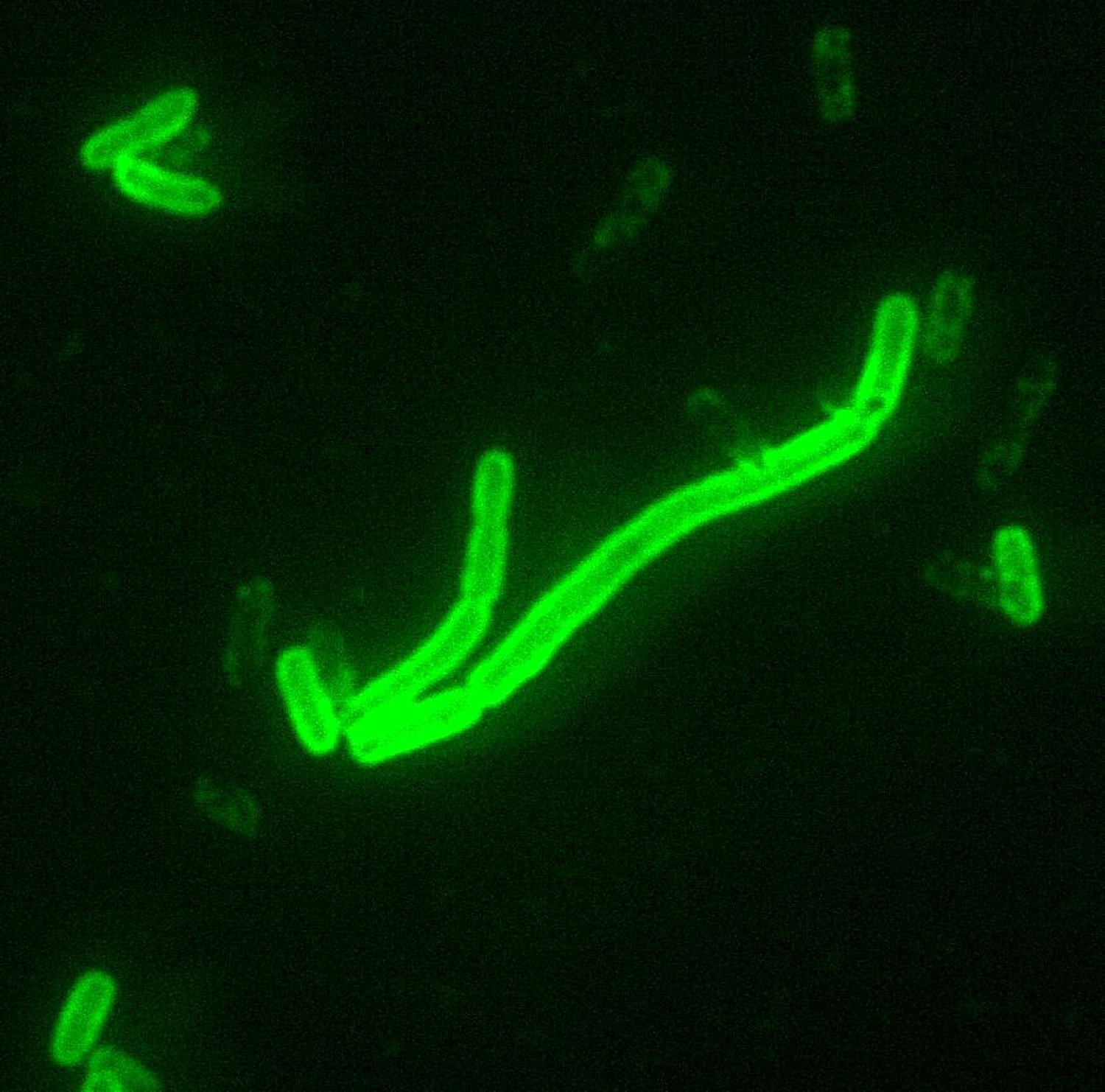
- Image: CDC Public Health Image Library #1918, Yersinia pestis, Direct Fluorescent Antibody Stain, courtesy Larry Stauffer, Oregon State Public Health Laboratory. Public domain.