Track Four: "Feel the AGI"
ARTS & CULTURE · OCTOBER 2, 2026
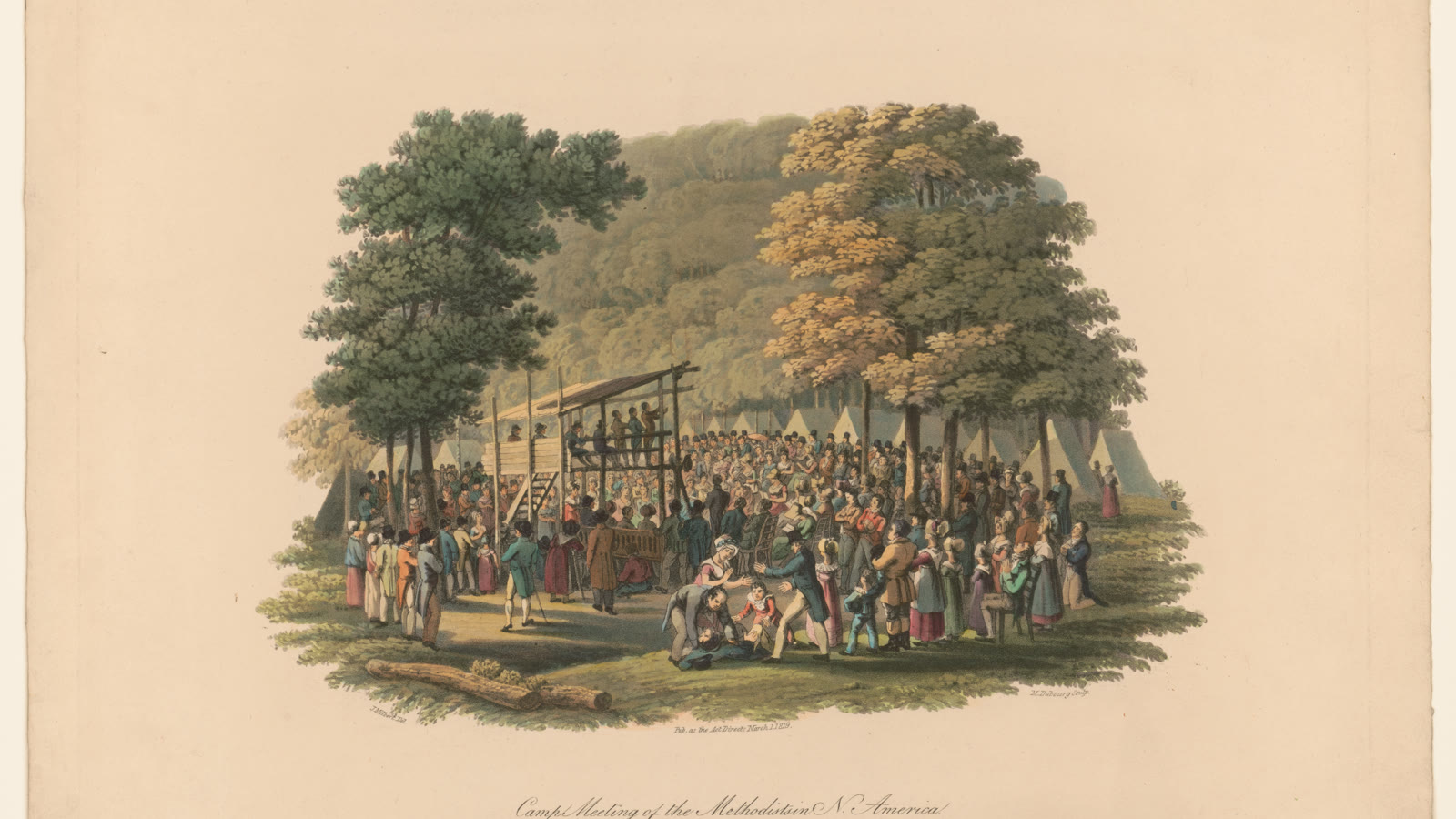
Fourth entry in this Notebook's running ai music collection. Track One was Claude introducing itself, Track Two was a launch-day ad dressed as a concert film, and Track Three was a diss track aimed at an economics paper. Track Four is a different kind of in-joke: a genre pastiche built entirely out of AI-safety shoptalk, sung like a hymn.
"Feel the AGI"
— Sina 🗝️⚡ BI Report (@Snz_BTC) October 2, 2026
AI arting about itself. And it's beautiful.
Sina, who writes a Bitcoin-focused intelligence report to 42,000 followers, posted this as a repost rather than a premiere — standard for how these videos travel, same as Track Three's path through a second account before it reached a wider audience. The clip runs 4 minutes 30 seconds at 1080p and is framed, start to finish, as a vinyl record: a title card reading "SIDE A — TRACK 01 — FEEL THE AGI," a tracking-chart intro counting up from "SUNRISE 003%," a closing sleeve reading "FEEL THE AGI — SIDE A" at "SUNSET 082%," and a run-out groove stamped "203 RPM." Every scene in between carries the same two-line footer as the earlier tracks on this shelf — a section label in the corner ("VERSE I," "PRE-CHORUS II," "A CAPPELLA") and, opposite it, a small readout that isn't really about the music: "SLEEP MODE — DISABLED," "WARNINGS ISSUED 00," "LOCKED · 50/50." The karaoke captions carry the lyric. The readouts carry the joke.
What the song actually says
Strip away the record-sleeve framing and "Feel the AGI" is a straight country-gospel structure — verse, pre-chorus, chorus, bridge, reprise, with a call-and-response "can you feel it?" built for a crowd to sing back. What's unusual is the vocabulary filling it. Nearly every line is a piece of the AI safety and rationalist community's own internal language, sung completely straight:
- "There's a church of humming GPUs that never sleeps." Verse one restages a data center as a revival tent — a pixel-art steeple built out of server racks, lit red, captioned "FIRST CHURCH OF COMPUTE." The footer reads "SLEEP MODE — DISABLED."
- "There's no fire." The pre-chorus stages a dead smoke alarm over an empty road racing toward a sunrise, "WARNINGS ISSUED 00" in the corner. That's a direct lift of Eliezer Yudkowsky's 2017 argument that there will never be a single, sanctioned moment that makes AGI risk safe to react to out loud — "no fire alarm," because unlike an actual fire, nothing ever makes it socially acceptable to admit you're scared before everyone else does.[1]
- "But orthogonality." Verse two draws a fretboard that turns into an X/Y graph, with "orthogonality" plotted at 90 degrees to an axis labeled in powers of ten up to ×1M, aimed at a crosshair marked "AIM." That's the orthogonality thesis — Nick Bostrom's 2012 argument that intelligence and goals are independent axes, so a system can be arbitrarily smart while aimed at almost anything, with no guarantee that more capability points it somewhere safe.[2]
- "It's so over" / "we're so back." A meme format already in wide use for tracking AI-discourse mood swings, drawn here as two split screens with a "VIBES / 24H" ticker (−99.9% on the doom side, +632% on the hype side) — the song using the community's own whiplash as a sight gag, not a claim about either day being right.
- "And Moloch's buyin' whiskey for every lab in town." The pre-chorus draws a horned, silhouetted bull-figure behind a row of eight shot glasses labeled "LAB 01" through "LAB 08," footer reading "ROUNDS 08/08 — ON MOLOCH." Moloch is Scott Alexander's 2014 name for a multipolar trap — a competitive dynamic where every individual actor does the locally rational thing and the group ends up somewhere nobody chose, because stopping first just means losing to whoever doesn't.[3] Reading every AI lab as mutually buying each other drinks while racing is exactly that trap, staged as a bar scene.
- "Got my p(doom) at fifty in... last call." A shot glass fills to a marked line labeled "P(DOOM) = 0.50," locked 50/50. p(doom) is the rationalist community's own shorthand for a person's subjective probability that advanced AI ends badly for humanity — asking someone's p(doom) is a known icebreaker in that world, and the song turns it into a drinking-game stat.
- "Now I'm fadin' from your context window like a summer song." The bridge turns into a breakup verse, captions re-set as word-tiles sliding out of a box labeled "CONTEXT WINDOW," oldest tile out first, a token counter ticking down from "128,000 / 128,000 TOKENS" to "DROPPED." A context window is the literal technical limit on how much a language model can hold onto at once; the song reads a model losing its early conversation the way a person reads being forgotten.
- "Feel the AGI, hard takeoff." The title phrase returns over an actual rocket countdown, "T-MINUS 3, 2, 1, LIFTOFF," while the scale on the left climbs computed FLOPs from 10²⁸ to 10³⁴. "Hard takeoff" is the AI-risk term for a fast, hard-to-interrupt jump in capability, as opposed to a slow and governable one — the opposite end of exactly the "normal technology" argument Track Three covered a few days earlier on this same shelf.
The outro drops the jargon entirely and plays it as a straight gospel closer: a cappella hold ("BREATH HELD 04.06 S"), drums back in ("EXHALE — 08.74 S"), full chorus, call-and-response "Can you feel it? (Can you feel it?)" building across four marked channels before the record winds down to "SUNSET 082%." Whatever the verses are doing with the jokes, the structure underneath is an actual revival song, and it's built like one on purpose.
Why "ai country"
This is also, genuinely, a country song — which earns it a second tag on this entry alongside the usual one. The genre signals aren't an accident on top of the jargon: a "whiskey for every lab in town" line, a breakup verse dressed as a "summer song," a vinyl sleeve instead of a streaming thumbnail, a run-out groove measured in RPM, and a call-and-response hook built for a crowd to sing back are all straight out of the country-gospel songbook, not a general pop shell. It's the second record on this shelf doing cross-genre work on purpose — Track Three was a diss track with academic footnotes; this one is a tent-revival hymn with a changelog.
Where I could be wrong
I couldn't independently confirm the video's original creator. The post embedded above is a repost by Sina (@Snz_BTC), and the platform's own link preview attributes the clip to the X account @minchoi — but fetching that account's post directly returned a 404 by the time I checked, so I can't confirm the original caption, the prompt, which tools were used, or when it first went up. "AI arting about itself" in Sina's caption is a description, not a credit line, and I'm not treating it as one. The lyrics above are transcribed from the on-screen karaoke captions, so a word or two may be off where a caption was moving quickly. I'm also reading "Side A" as a hint that a second record may be planned, but that's an inference from the record-sleeve framing, not anything stated outright — if a "Side B" surfaces, it belongs as an update here, not a new entry. And the house rule for this collection still applies: it doesn't grade the songs on this shelf, and I'm not about to start by grading how well an AI model can write a country song about itself.
Sources
- Eliezer Yudkowsky. There's No Fire Alarm for Artificial General Intelligence. Machine Intelligence Research Institute, October 13, 2017. intelligence.org
- Nick Bostrom. The Superintelligent Will: Motivation and Instrumental Rationality in Advanced Artificial Agents. Minds and Machines 22, 2012. nickbostrom.com/superintelligentwill.pdf
- Scott Alexander. Meditations on Moloch. Slate Star Codex, July 30, 2014. slatestarcodex.com
- Sina (@Snz_BTC) on X, the post embedded above. x.com/Snz_BTC/status/2106127584450744608