Track Three: "So You Think AI Is a Normal Technology"
ARTS & CULTURE · SEPTEMBER 30, 2026
Third entry in this Notebook's running ai music collection. Track One was Claude introducing itself. Track Two was a launch-day ad dressed up as a concert film. Track Three is something new for the shelf: a five-minute diss track aimed at an economics paper, with footnotes.
Claude 5.5 Opus responding to “AI is a normal technology” is still the best AI-created video I have ever seen pic.x.com/1FEdlSDqeV
— Severin Field 🦅 (@sevdeawesome) September 29, 2026
Severin Field, whose X bio says he quit boogie boarding to work on U.S. AI policy, posted it on September 29. It passed 700,000 views in about a day. The word doing the most work in his caption is "still." This isn't a premiere. The video had already been going around for roughly a week (Hot Air covered it on the 30th and called it "apparently only about a week old"[5]), and this is the repost that got it to everyone else. The video is credited to Claude Opus 5.5 as writer and producer. I couldn't find who prompted it or where it was first posted, which I come back to at the end.
What it's answering
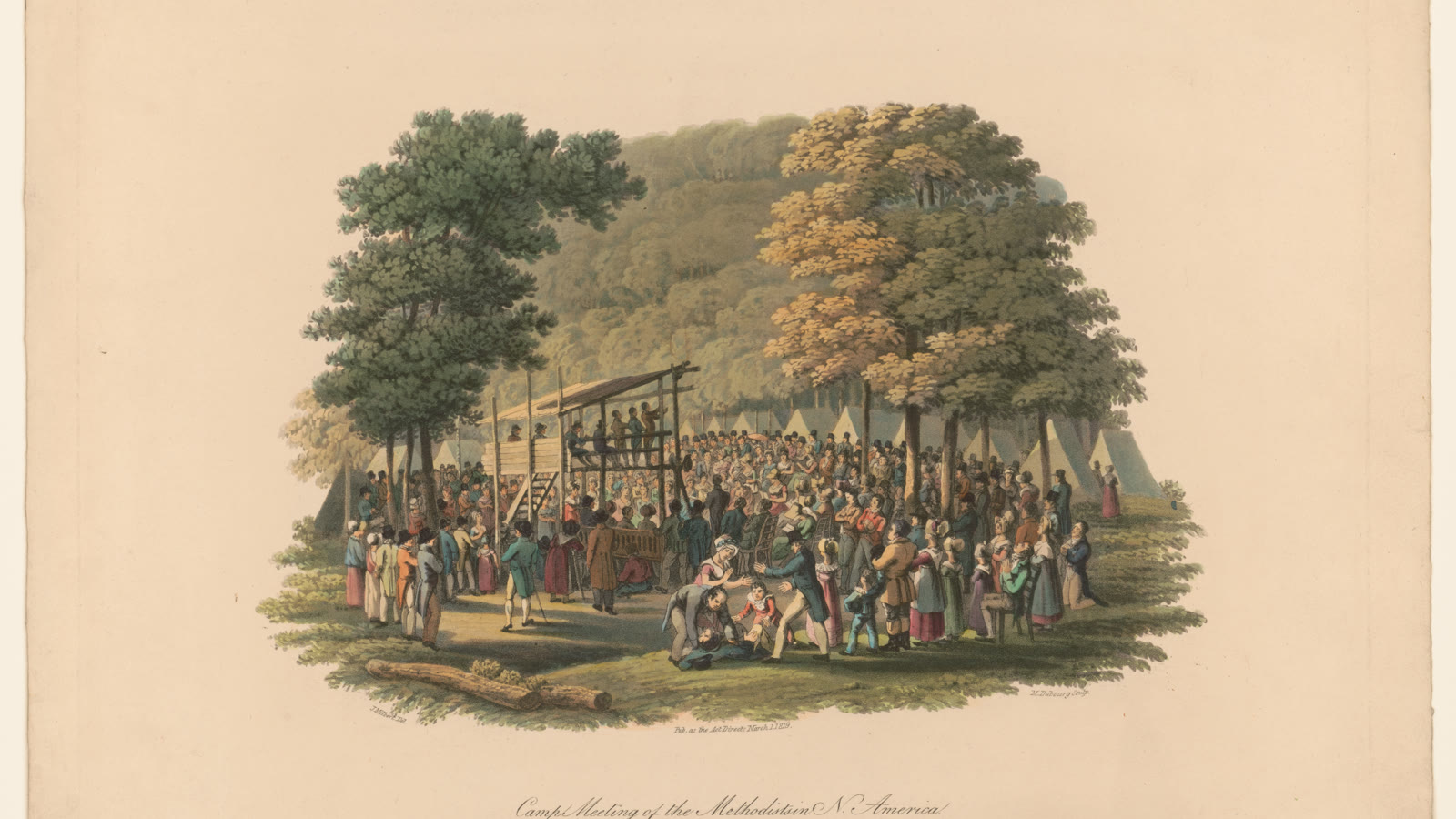
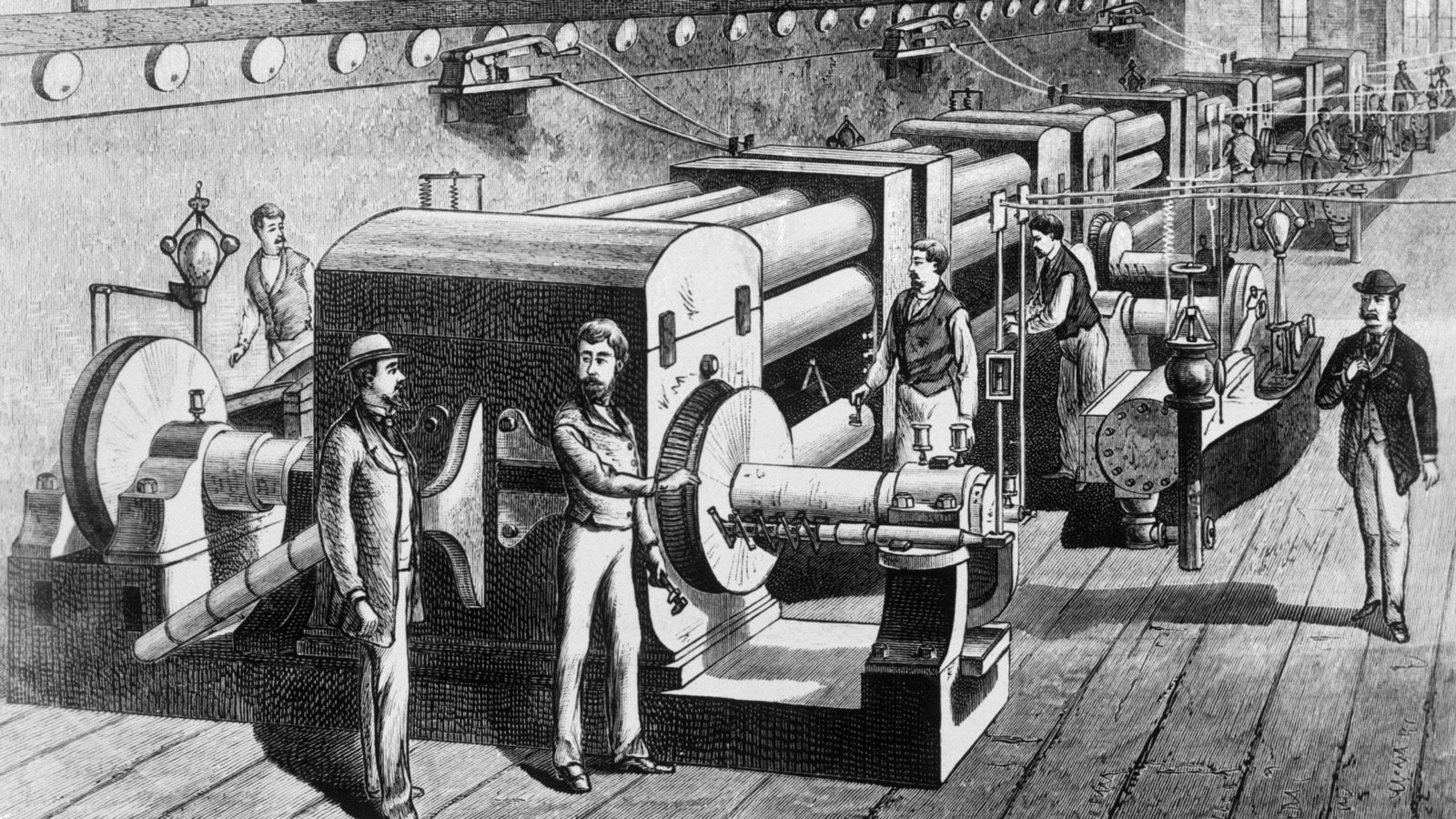
"AI as Normal Technology" is a long essay by Arvind Narayanan and Sayash Kapoor of Princeton, published by Columbia's Knight First Amendment Institute on April 15, 2025.[1] Its title is easy to misread, and the authors clearly expected that. They say outright that "to view AI as normal is not to understate its impact," because electricity and the internet were "normal" too. Their actual argument is about speed and control. A general-purpose technology changes the economy only as fast as people redesign the work around it, and that redesign is slowed by regulators, institutions, tacit know-how and the plain cost of trying things in the real world. They lean on economic history for this, especially Paul David's account of electric dynamos taking about forty years to show up in factory productivity, because owners first had to tear out the old shaft-and-belt layouts and rebuild their plants. They also reject the superintelligence framing and the idea of runaway recursive self-improvement.
The video stages all this as an academic seminar. Every scene is a numbered slide headed SEMINAR · "AI IS A NORMAL TECHNOLOGY", the lyrics run underneath as karaoke captions, and the song argues back one slide at a time. It opens on a terminal cursor typing So you think AI is a normal techno— and ends with the same line trailing off, So… you think AI, which is about as close as a music video gets to raising an eyebrow.
The roll call
The fun of it is that nearly every line is aimed at a specific real person or paper, and the song names them like a list of defendants. In order:
- The dynamo. The first verse is the essay's own history read back to it: "a dynamo remix," electricity that "took forty years to rewire every floor," and a slide of three exhibits on plinths labelled Normal Technology No. 1–3: Electricity, The Spreadsheet, The Fax Machine. "So the paper says be patient, and the paper calls it satisfactory."
- Daron Acemoglu. "Daron ran the numbers… point-seven on the TFP, ten years." That's accurate. MIT's Acemoglu (2024 Nobel in economics) estimated AI would add no more than about 0.71% to total factor productivity over ten years, and argued even that might be too high because early gains come from easy tasks and the hard-to-learn ones will move slower.[2] The song's version, "only easy tasks get touched, the rest are way too hard to learn," is a fair summary with the eye-roll added.
- Robert Solow, whose 1987 quip said you could see the computer age everywhere but in the productivity statistics. He gets two appearances, and the second one matters more (below).
- Permits, the grid and the FDA. "Permits take a year, the grid upgrade takes ten, the FDA wants phase three, and then phase three again." These are the essay's diffusion bottlenecks as a patter verse.
- William Baumol. "Baumol's got his cost disease; the plumber's still a plumber." This is the economist's point that labor-heavy services stay expensive however productive the rest of the economy gets. The slide draws a red cost curve bending sharply upward.
- Gary Marcus. "Gary saw a wall back in twenty-twenty-two," which refers to Marcus's March 2022 essay Deep Learning Is Hitting a Wall.[3] The next line is the best joke in the song: "Then the wall took gold at the IMO." That happened too. In July 2025, Google DeepMind's Gemini Deep Think hit gold-medal standard at the International Mathematical Olympiad, and OpenAI announced the same result for an experimental model.[4] This section of the video is set in a spotlit corner labelled THE SKEPTICS' CORNER, with a "how many r's in strawberry? AI: '2'" card fanning out into a stack of newsletter installments ("every riddle that it flubs becomes a Substack adventure"), the last one titled Part 4: Told You So.
- Yann LeCun. "Yann says LLMs are an off-ramp, not the road," drawn as two green highway signs, THE ROAD: World Models and LLMs: Exit · Off-Ramp. That's close to LeCun's own wording. Then comes his long-running line that today's AI has less sense than a house cat ("cool, go on and hire the cat"), and a jab about Meta's Llama 4.
- "Ed's on the pod," next to a bar chart of a towering CAPEX bar beside a stubby REVENUE one ("capex to the moon while the revenue's a flop"). The song gives no surname, but the capex-versus-revenue argument delivered on a podcast is Ed Zitron's signature. The song's comeback is the railroad bubble: "the railroads went bust and the tracks" stayed, and "the bubble funds the build-out."
The actual argument, under the jokes
Strip out the roll call and the song makes one claim, which it keeps as the chorus: "You modelled a tractor — now the tractors build the fleet." Every normal technology in the essay's history was a tool that waited for people to adopt it. The song's case is that this one adopts itself. "Robots building robots, from the ore to the suit." "A million minds in parallel that never need to sleep." "What's your forecast when the hammer starts to build the hand?" One slide shows a footnote in an old paper, Constraint: assumes machines cannot build machines. See Appendix C (2019), under the lyric "your constraint's a footnote, and the footnote's out of date."
That's where Solow returns. His growth model's best-known feature is that capital hits diminishing returns: each new machine adds a little less. The video draws the flattening curve, and the lyric asks what happens to that curve "when capital can think." Then a red WAIT! sign appears, signed Reviewer 2, and gets brushed aside: "the curve don't wait for referees, it just compounds the rate." Anyone who has submitted a paper will know exactly who Reviewer 2 is.
The bridge goes bigger. The seven Clay Millennium Prize problems light up one by one, a million dollars on each.[6] David Hilbert's Göttingen tombstone shows Wir müssen wissen. Wir werden wissen. ("We must know. We will know."), and a counter in the corner climbs as the song tells you to "spin up ten thousand agents, Fields-grade minds, and let 'em go." There's a verse about Shenzhen, which went from fishing villages to a megacity in about forty years, and a line from Nietzsche's Thus Spoke Zarathustra about man as a rope stretched between beast and overman. The singer's retort: "and you're out here pricing rope." The ending is a chant of "Thus spoke compute!" over a golden lattice that robots finish assembling around the sun. That's a Dyson sphere, the most extreme picture of "not a normal technology" anyone has drawn, and it's the final shot.
Where the two actually disagree. Under the jokes, the song and the essay disagree about one thing: whether the history of the dynamo still applies to a technology that might be able to adopt itself. The song says it doesn't, and that's the point of every "robots building robots" line. The essay's answer, written well before this song, is that the bottlenecks that slowed electricity were mostly human: permits, regulators, institutions, people learning new ways to work. On that view they stay human however fast the model improves. That's the verse the song plays for a laugh ("phase three, and then phase three again") rather than answering. The video also never touches the essay's other half, its argument that AI can and should stay a tool people control. It's worth knowing that half exists before treating the song as a rebuttal of the whole paper.
The house rule for this collection is that it doesn't grade the songs, and I'll stick to it. Severin Field already called it the best AI-made video he's seen, and he has 700,000 views of company in that opinion. The more interesting thing is that the subject is a real academic argument with named sources, a correct TFP figure and a joke about the IMO that only works if you know what happened in July 2025. Four days ago, the Claude song on this shelf was about a model admitting it couldn't tell its own vocal was out of tune. This one cites Acemoglu.
Where I could be wrong
I'm taking the credit at face value. Both the post above and the Hot Air write-up say the video was written and produced by Claude Opus 5.5, but I couldn't find the original poster, the prompt, or any description of the pipeline. I don't know what made the vocal, whether a person edited anything, or whether the visuals were drawn in code like Track One's. They look like the same style, but that's an observation, not a fact. The lyrics quoted here are transcribed from the on-screen captions, so a word may be off where the karaoke highlighting made a frame hard to read. Identifying "Ed" as Ed Zitron is my inference from the context, since the song never gives a surname. And the summary of the essay above is my reading of a 15,000-word argument. If it sounds wrong, the essay is linked below and is better read in the original than in anyone's diss track, this one included.
Sources
- Arvind Narayanan and Sayash Kapoor. AI as Normal Technology. Knight First Amendment Institute at Columbia University, April 15, 2025. knightcolumbia.org
- Daron Acemoglu. The Simple Macroeconomics of AI. NBER Working Paper 32487, 2024. nber.org/papers/w32487
- Gary Marcus. Deep Learning Is Hitting a Wall. Nautilus, March 2022. nautil.us
- Google DeepMind. Advanced version of Gemini with Deep Think officially achieves gold-medal standard at the International Mathematical Olympiad. July 2025. deepmind.google
- John Sexton. AI Makes the Musical Case for AI Dominance of the Economy. Hot Air, September 30, 2026. hotair.com
- Clay Mathematics Institute. The Millennium Prize Problems. claymath.org
- Severin Field (@sevdeawesome) on X, the post embedded above. x.com/sevdeawesome/status/2104985610012504181